
Ascended Masters
Angels
Violte Flame
Minsitry
God Dovernament


Explore Our Services
July 31, 2026
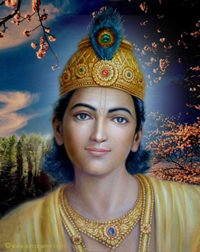
Krishna: Divine Love, Wisdom, and the Charioteer of the Soul
Krishna is a divine being, an incarnation of the Godhead, an avatar, and one of the most beloved figures in the spiritual traditions of India. He has captured the imagination and devotion of Hindus throughout the world in many forms: as the mischievous child, the lover of the gopis, the protector of souls, and the wise counsellor of the warrior Arjuna.
In the teachings of the Ascended Masters, Krishna is revered as a great avatar and divine teacher whose life and message reveal the path of love, duty, devotion, and union with God.
Krishna is known as the eighth incarnation of Vishnu, the Second Person of the Hindu Triad. His teachings are preserved in the Bhagavad Gita, one of the most beloved spiritual scriptures of India and part of the great epic, the Mahabharata.
The Meaning of Krishna
The name Krishna comes from Sanskrit and means “black” or “dark blue.” He is often depicted with blue, blue-black, or dark skin, symbolizing the mystery, depth, and vastness of the divine.
Krishna’s life is filled with stories of divine play, courage, love, wisdom, and spiritual victory. Whether appearing as a child, a cowherd, a friend, a lover, a teacher, or a charioteer, Krishna reveals the many ways God draws the soul back into divine union.
When we send devotion to Krishna through mantra and sacred song, we open a highway of love to his heart. In return, Krishna sends back our devotion multiplied many times through his own divine love.
Krishna as the Divine Child
As a child, Krishna reveals the freedom and spontaneity of the divine. He plays, dances, laughs, and moves through life with joy and innocence. His childhood stories show God not as distant or severe, but as intimate, approachable, playful, and full of delight.
One of the most beloved stories of Krishna’s childhood is his stealing of butter. Krishna and his friends would enter the homes of the gopis and take freshly prepared butter. Though the gopis complained to his mother, they also delighted in watching Krishna enjoy their offerings.
This story carries deep spiritual symbolism. Butter, or ghee, has sacred meaning in Hindu tradition and is connected with illumination and clarity. The offering of butter to Krishna becomes a symbol of devotion. The soul gives the best of itself to God, and God receives that offering with joy.
Krishna as the child teaches us that God desires intimacy with the soul. He invites us to love him not only with reverence, but with tenderness, joy, and closeness.
Krishna, the Gopis, and the Call of Divine Love
As a youth, Krishna plays his flute, and the sound of that flute enchants the gopis. When they hear it, they stop whatever they are doing and run to him.
The sound of Krishna’s flute is more than music. It is a summons. It represents the call of God to the soul.
The gopis’ love for Krishna symbolizes the soul’s longing for union with God. Their devotion shows the path of bhakti yoga — the path of love, surrender, and divine devotion.
Radha, the most beloved of the gopis, represents pure devotion and divine bliss. Her love for Krishna reveals the mystery of the divine romance between God and the soul, the Guru and the chela, the beloved and the one who longs to return to the heart of the Beloved.
Krishna and Arjuna
One of the most important moments in Krishna’s life is his role as charioteer to Arjuna in the Bhagavad Gita.
On the eve of a great battle, Arjuna is overcome with sorrow and confusion. He does not want to fight because those on the battlefield include his own relatives, teachers, and friends. In this moment of crisis, Krishna instructs him on duty, the soul, action, devotion, and union with God.
Krishna teaches Arjuna that he must fulfill his dharma — his duty and reason for being. The outer battle represents Arjuna’s responsibility in the world, but it also symbolizes the inner battle between the higher and lower nature.
This teaching is deeply relevant for every spiritual seeker. Each of us has an inner battlefield. Each of us must choose between fear and courage, attachment and surrender, confusion and wisdom, the human will and the divine will.
Krishna, as the charioteer, guides the soul through that battle.
The Four Yogas
In the Bhagavad Gita, Krishna teaches the paths of union with God. These include:
Jnana yoga — the path of knowledge
Raja yoga — the path of meditation
Karma yoga — the path of selfless work and right action
Bhakti yoga — the path of love and devotion
These paths correspond to the development of the whole being. Through knowledge, meditation, service, and devotion, the soul moves toward union with God.
Krishna does not teach escape from life. He teaches right action in life. He teaches the soul to serve, to love, to know God, and to act according to divine purpose.
Krishna as the Charioteer of the Soul
Krishna can be understood as the charioteer of the soul.
Just as he guided Arjuna through the crisis of battle, Krishna can guide each one of us through the tests, decisions, and karmic challenges of life.
We can see Arjuna as the archetype of the soul, and Krishna as the divine guide, the higher presence, the one who knows the way back to God.
In this sense, Krishna represents the divine wisdom that stands beside us when we do not know what to do. He reminds us that we are not alone on the battlefield of life. The Lord is near. The Guru is near. The divine presence within us is ready to guide us if we will listen.
Christ and Krishna
There are beautiful parallels between Lord Krishna and Lord Jesus.
Both reveal divine sonship. Both teach the way back to God. Both embody divine love, sacrifice, wisdom, and the path of union with the Father.
Krishna reveals his universal form to Arjuna, showing that the whole universe is contained within him. This moment points to the mystery of God-consciousness — that the one who has attained union with God becomes one with God.
Likewise, Jesus reveals the Christ consciousness and the path of sonship. Krishna and Jesus do not compete with one another. They both reveal the divine reality that the soul is called to embody.
They show us what we are intended to become: God-free beings, fulfilling our divine roles as part of the mystical body of God.
Krishna and the Healing of the Inner Child
One of the most tender teachings connected with Krishna is his assistance in healing the inner child.
Through mantras and devotional songs, students can call to Lord Krishna and visualize his presence over themselves at the age when they experienced emotional trauma, physical pain, mental pain, or deep sorrow.
We can ask for these records to pass before the third eye and invite Krishna’s presence to stand over the scene, over ourselves, and over all involved.
As we send love and devotion to Krishna, he multiplies that love through his heart and sends it back to us. That love can help transmute pain, soften old records, and restore the soul’s connection with divine innocence.
Krishna’s presence reminds us that only God is real. Where pain once seemed to rule, divine love can enter. Where the child within was wounded, the Lord can bring healing.
The Devotional Path of Krishna
Krishna teaches the soul to love God with the whole heart.
His path is joyful, intimate, wise, and transformative. He meets us as child, beloved, teacher, friend, and charioteer. He calls us through the music of the flute, instructs us through the wisdom of the Bhagavad Gita, and guides us through the inner battle of life.
To meditate on Krishna is to remember divine love.
To sing to Krishna is to open the heart.
To call to Krishna is to invite guidance, devotion, healing, and union with God.
May Lord Krishna guide the chariot of our souls.
May his love heal the inner child.
May his wisdom strengthen us in the hour of decision.
May his presence remind us that the soul’s highest destiny is union with God.
Source / Reference
This blog reflection is based on the Krishna content provided for the Washington, DC Community Teaching Center blog, including teachings on Krishna as an avatar, the eighth incarnation of Vishnu, the divine child, the beloved of the gopis, the charioteer of Arjuna, and the teacher of the four yogas in the Bhagavad Gita.


Church Universal and Triumphant® Washington, DC Community Teaching Center
Follow our community as we share spiritual insights, teachings, and inspiration.
A Spiritual Home in Bowie, Maryland for Seekers of Truth, Freedom, and Divine Purpose
Explore Upcoming Events
Educational Workshops
for Students of the Light
Upcoming Classes & Events
Tel: 240.391.6949
7809 Chestnut Lane, Bowie, MD 20715
BASED iN bowie, maryland
